

The question isn’t if you should use AI, but how you use it. In 2026, universities are moving away from total bans and toward “Responsible Use” policies. However, there is still a very thin line between a study aid and academic dishonesty.
If you want to protect your academic reputation while still using the best tools available, you need to follow these three golden rules of AI Ethics.
1. The “Think-First” Workflow (Avoid the Copy-Paste Trap)
The fastest way to get caught by an AI detector like Turnitin is to copy a full paragraph directly from ChatGPT. AI-generated text has a specific “fingerprint” (predictable sentence structures).
- The Ethical Way: Use AI to generate an outline or a brainstorming list. Then, write the actual sentences yourself.
- The Rule: If the AI wrote the sentence, it’s not yours. If the AI provided the structure and you provided the words, you’re in the clear.
2. Fact-Checking: Don’t Let the AI “Hallucinate” Your Grade Away
AI models are “probability engines,” not encyclopedias. They can sometimes invent facts, dates, or even scientific citations that don’t exist.
- The Ethical Way: Never submit a fact generated by AI without verifying it through a primary source (like a textbook or a tool like Perplexity or Consensus).
- The Hack: Ask the AI: “Give me three real-world sources that prove this point.” If it can’t find them, don’t use the information.
3. Be Transparent (The Power of the AI Disclosure)
Many professors now allow AI if you disclose it. Being honest about your tools actually makes you look like a more advanced, tech-savvy student.
- How to do it: At the end of your assignment, add a small “AI Disclosure” note.
- Example: “Tools used: ChatGPT was used for initial brainstorming and structural outlining. All final drafting and factual verification were performed by the author.”
💡 Why Ethics Matter
Using AI to bypass learning is a short-term win but a long-term loss. You might pass the test, but you won’t have the skills for the job. Use AI as a co-pilot, not the pilot.
“Academic integrity isn’t just about following rules; it’s about ensuring that the person getting the degree is actually the one with the knowledge.”
Blog
This section offers a summary of the blog, presenting a range of articles, perspectives, and materials to educate and motivate readers.
-

How to Get Better Grades in Any Subject Using AI (Step-by-Step Guide)
Stop wasting hours on boring notes. Learn how to use AI for active recall, custom…
-

The 2-Minute AI Trick That Doubles Your Retention (Without Re-Reading)
Stop wasting hours re-reading notes. Learn how to use AI to trigger active recall and…
-
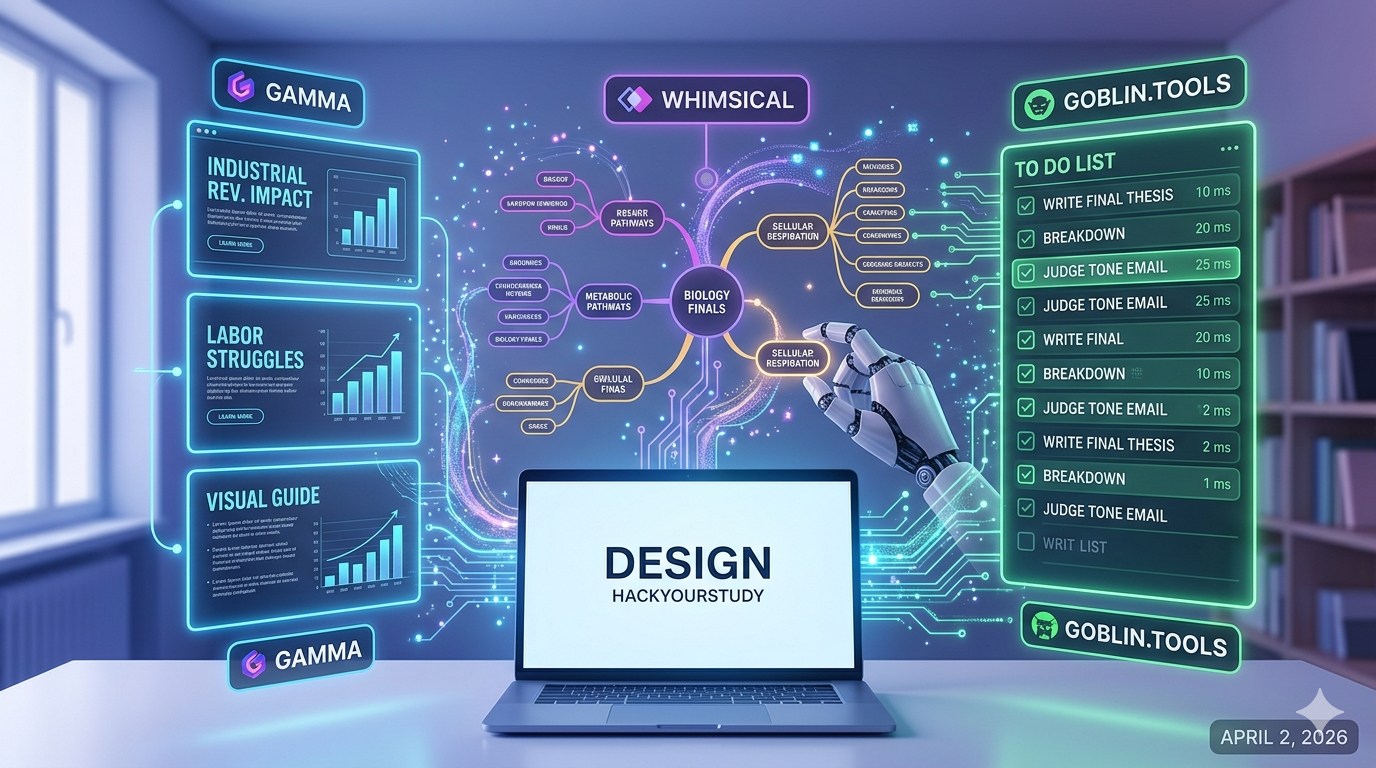
Beyond Text: The AI Design Toolkit Every Student Needs
Stop fighting with PowerPoint. 🎨 Discover the AI tools that generate instant presentations, mind maps,…

Leave a Reply